
When we talk about systemic racism and historical redlining, the concepts can sometimes feel abstract or invisible to the modern eye. In their interactive feature, “Built to keep Black from white,” NBC News tackles this challenge by anchoring the history of housing discrimination to a literal, physical structure: Detroit’s Birwood Wall.
Built in 1941, the half-mile-long concrete barrier was erected by real estate developers for one specific purpose: to separate an existing Black neighborhood from a proposed white one, thereby securing federal mortgage financing that required racial segregation. Through a highly guided, map-driven visual narrative, the piece proves that America’s racial divide is not an accident, but the result of intentional, engineered policies.
The story utilizes a linear, cinematic structure. Instead of asking the user to explore a complex dashboard, the piece guides the reader along a single, deliberate path. It acts as an annotated visual essay, seamlessly blending physical geography with historical data.
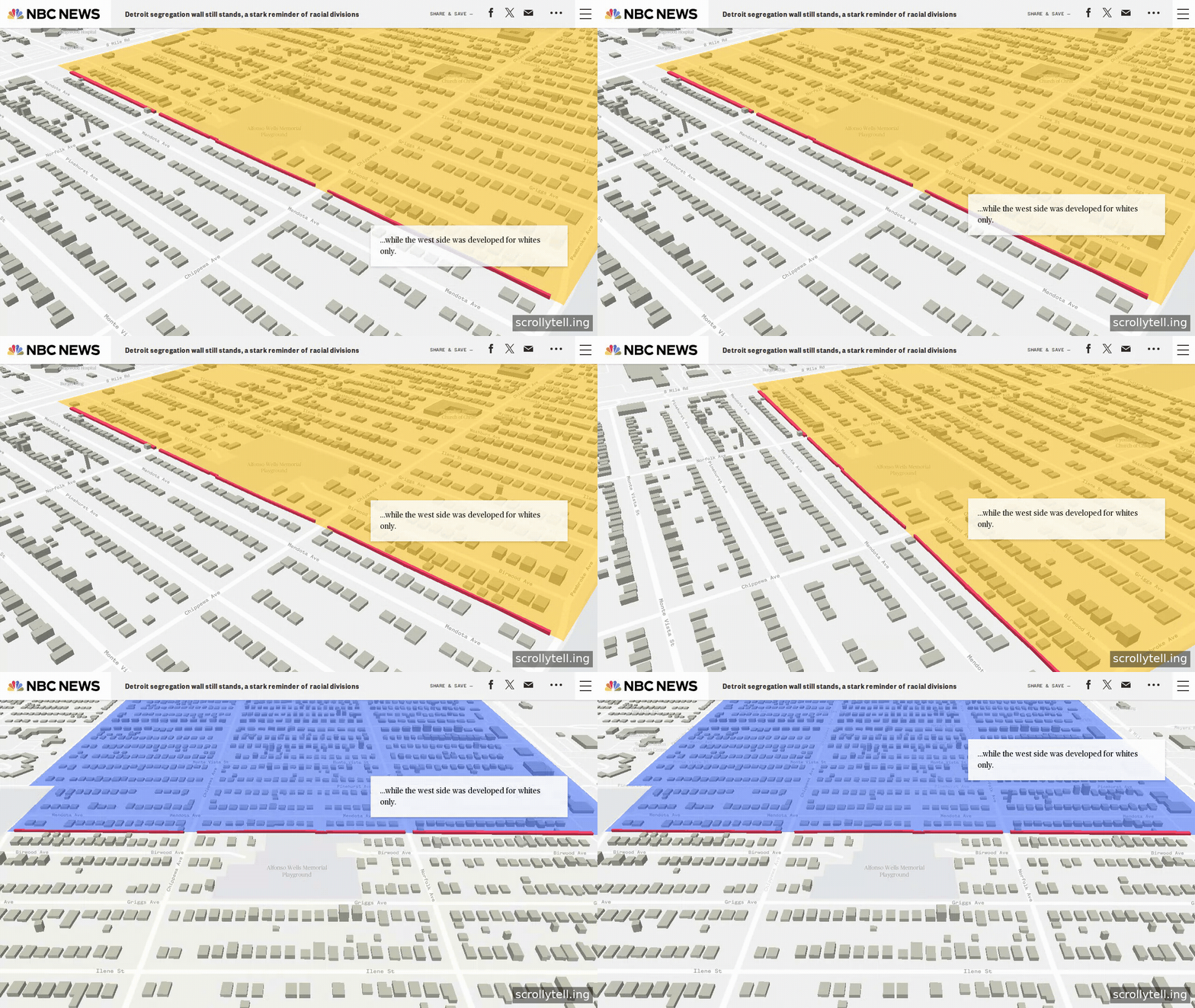
One of the most effective scrollytelling tactics used is the transition from a flat, 2D neighborhood map into an isometric 3D view. As the reader scrolls, a stark red line is drawn down an alleyway between houses. Moments later, the map fills with contrasting colors—a block of yellow on the east and a block of blue on the west—while scroll-triggered annotations plainly state who was allowed to live where. By color-coding 3D physical space, the piece makes the arbitrary and jarring nature of segregation instantly understandable.

Once the spatial reality of the wall is established, the narrative pivots to show its enduring legacy. The scrollytelling relies on scroll-triggered dissolve transitions to bridge the gap between history and the present day. We see a stark, black-and-white archival photograph of the barren concrete wall cutting through an empty field. As the user continues to scroll, the image slowly cross-fades into a modern, full-color photograph of the exact same structure, now surrounded by mature trees and covered in vibrant community murals.
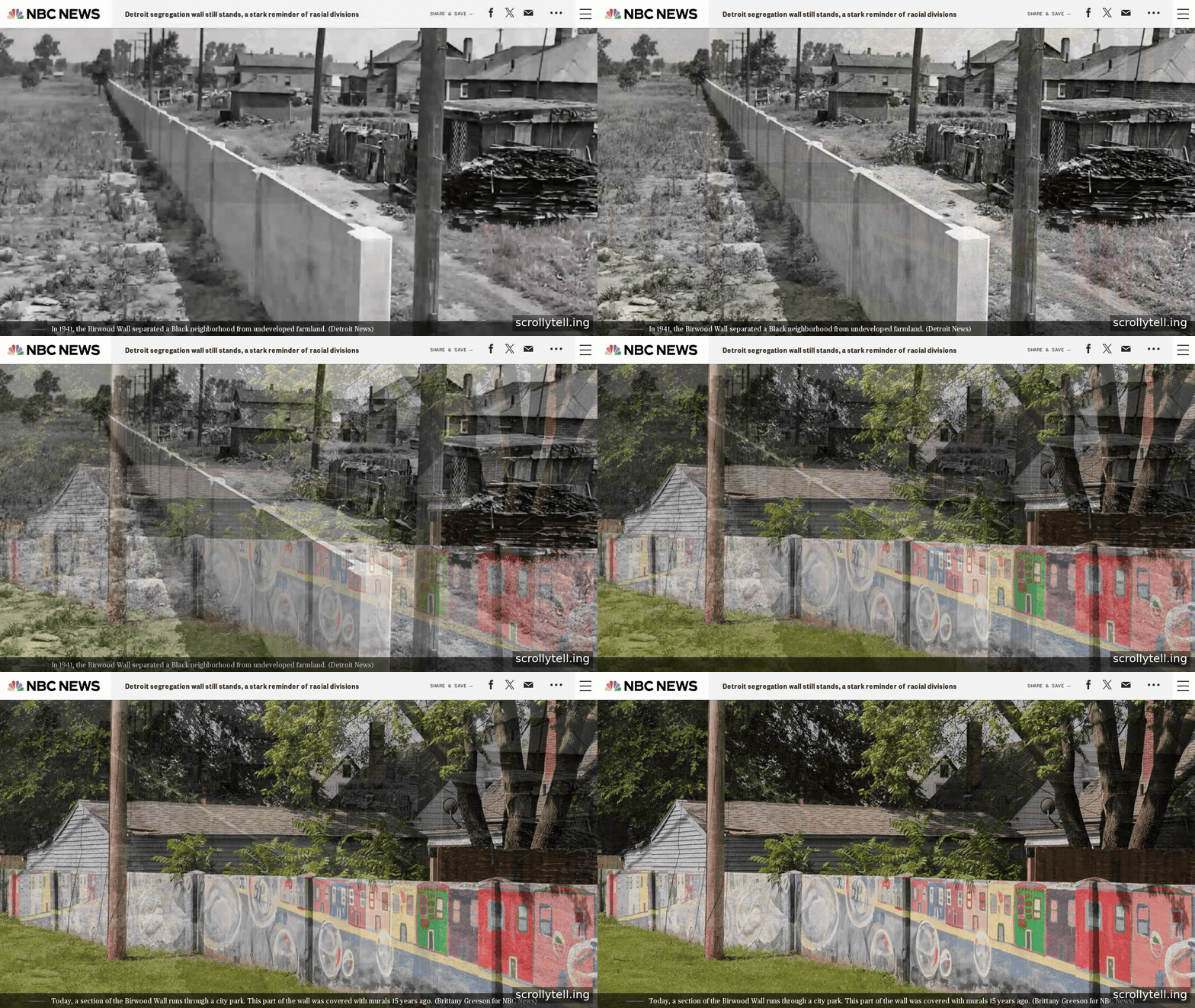
This visual effect does more than just show the passage of time. It forces the viewer to confront the fact that while the laws have changed and the community has attempted to reclaim the space through art, the physical barrier—and the economic disparity it cemented—remains firmly in place.
Further down the page, the article layers actual 1930s government redlining maps over the modern street grid, proving the discriminatory practices with hard documentary evidence.
Ultimately, this scrollytelling piece succeeds because it marries form and function. By tying the abstract forces of systemic racism to the physical geography of a single neighborhood, NBC News turns a complex historical injustice into an undeniable, tangible reality that the reader can literally scroll through.